
Forging the Pre-Competitive Coalition.
A Neutral Ground for Innovation.
The Cultivation Institute is a tax-exempt entity designed to facilitate collaboration between utility operators and original equipment manufacturers (OEMs). Together, we can co-fund and enhance the cyber-physical workforce infrastructure critical for future readiness.
Capital Deployment & Risk Mitigation
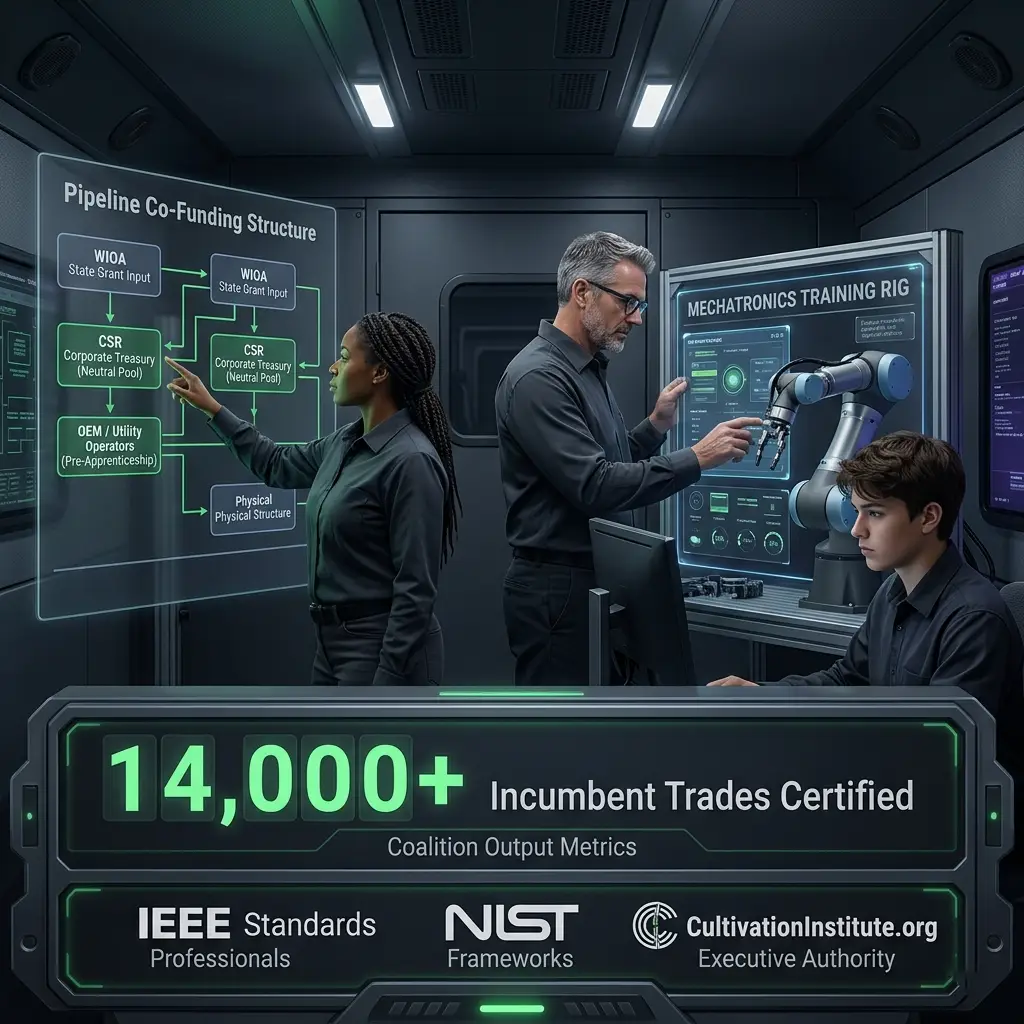
OEMs and utility operators can strategically leverage corporate CSR treasuries in conjunction with state WIOA grants to achieve cost-effective training solutions. By aligning financial resources for trades training, organizations can co-fund initiatives that bridge skill gaps and enhance workforce capabilities without direct expenses. This collaborative approach maximizes the return on investment while ensuring a robust talent pipeline essential for industrial competitiveness.
Safeguarding Proprietary Integration
Our mission centers on three core pillars that ensure robust integration within the industry:
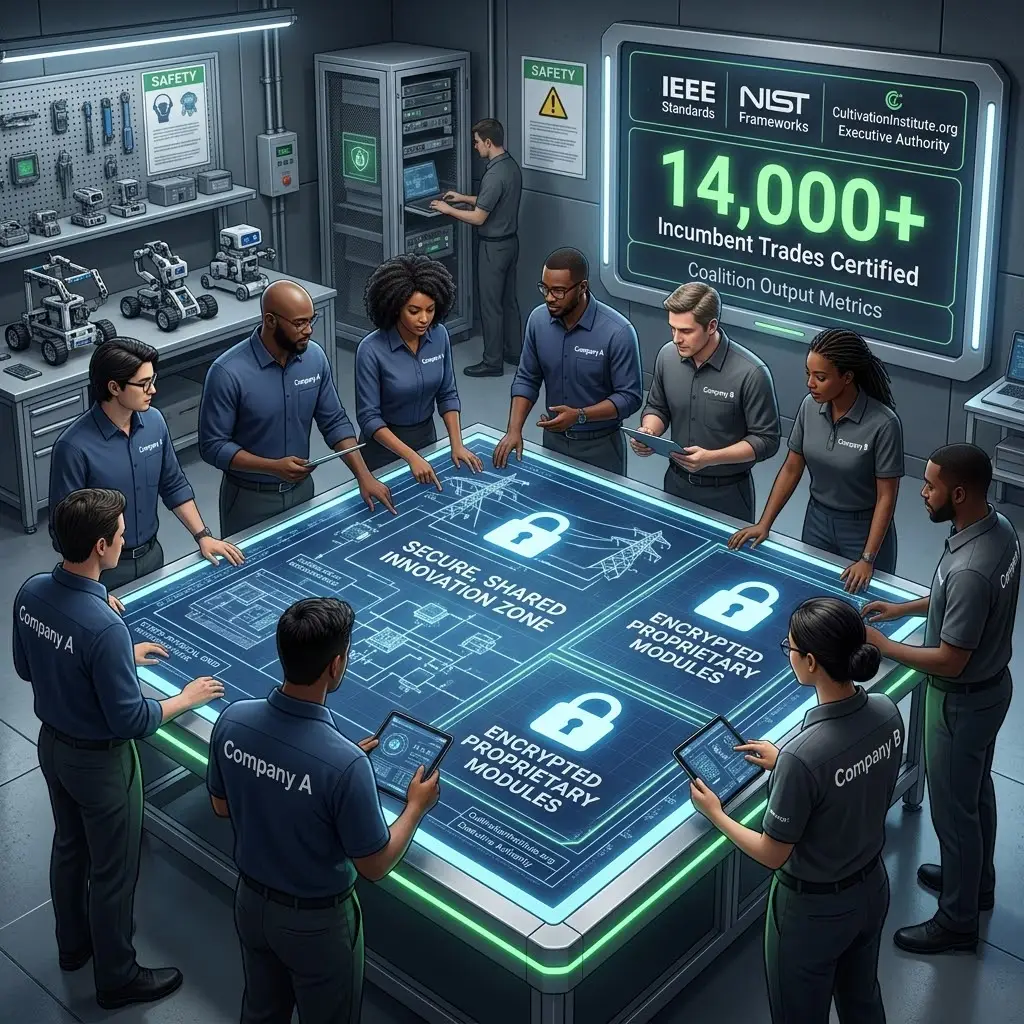
- Neutral IP Protection: Establishing a safe harbor for competing OEMs to foster innovation.
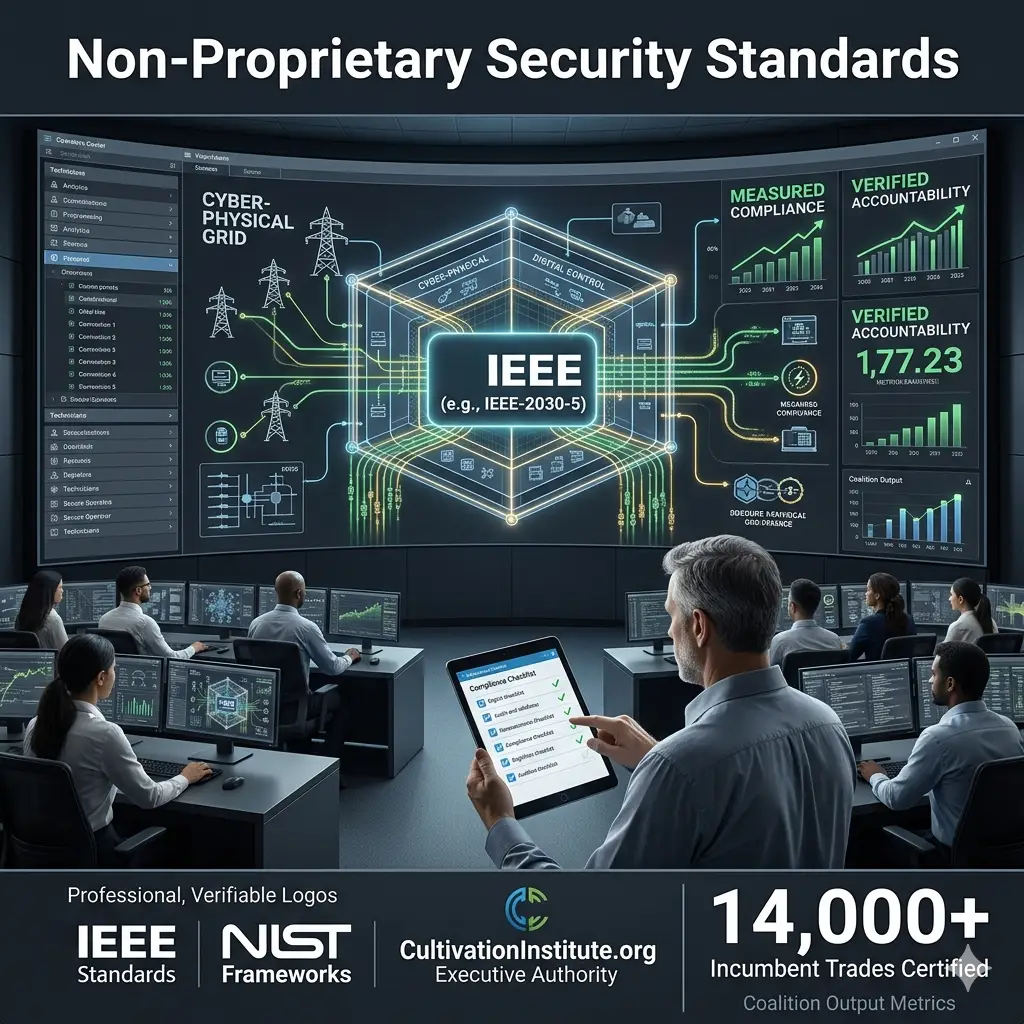
- Non-Proprietary Security Standards: Aligning with IEEE frameworks for measured compliance and accountability.
- Shared Workforce Output: Directly deploying certified trades workers to enhance utility grid operations.

Strategic Integration Phases
Our approach centers on a structured timeline that ensures alignment and effectiveness. We facilitate an engaged onboarding process that meticulously aligns executive mandates with actionable strategies across multiple phases.
- Executive Briefing & Mandate Alignment: Introduces stakeholders to our vision and objectives.
- CapEx/OPEX Co-Funding Structuring: Establishes financial partnerships to support growth.
- Mobile Innovation Truck Regional Deployment: Integrates mobile resources for field application.
Secure the Grid Transition.
Invest in Critical Infrastructure Development.
Utility operators and OEM executives are invited to allocate their capital towards our tax-exempt infrastructure initiatives. This is a pivotal moment to enhance critical grid systems while fostering resilience and technological advancement. By investing in our programs, you can ensure a dependable energy future and align with industry standards focused on sustainability.